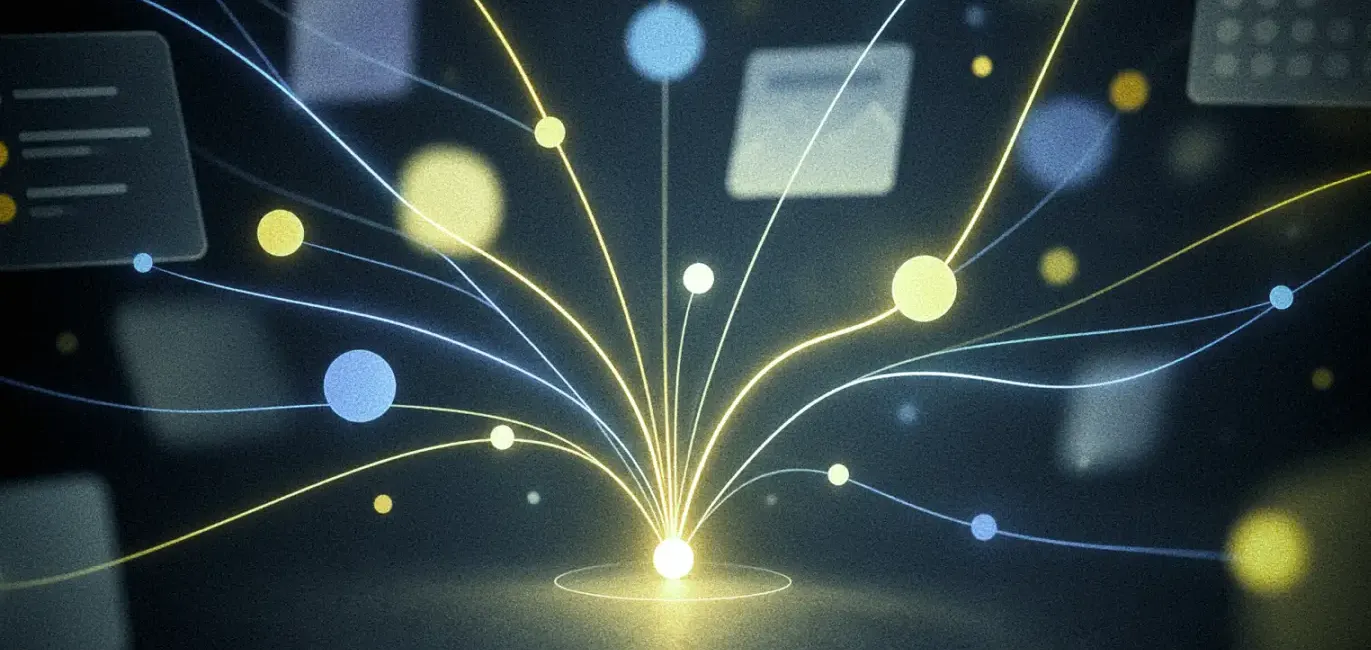
In 2017, a paper called Attention Is All You Need introduced the Transformer. Its central idea is simple: when processing a word, a model does not have to pass information along one step at a time. It can determine which parts are most relevant and direct its attention there.
I first came across the paper because I wanted to understand how AI works. Later, I realized that its description of attention, though written in the context of machine learning, offered an interesting way to think about how we think.
Attention shapes what you see
Our brains encounter a vast amount of information every day. Attention helps us choose which parts matter most right now. When you focus on a goal, details related to it begin to emerge from the background noise.
Often, thinking something through is less about gathering more information than finding what deserves your attention among the information you already have.
Of course, a human brain is not a Transformer. “Attention” in a machine is a computational mechanism; human attention is richer and more complex.
Still, there is an interesting point of contact: what matters is not holding on to everything at once, but continually judging what is most relevant to the present moment.
That also means effective thinking often comes less from thinking more than from seeing more clearly.
Instead of letting many things occupy your mind at the same time, choose the one or two that matter most now and give them room.
Take the context out of your head
If attention needs a focus, another question follows: where do you put the things you do not need to think about yet but do not want to forget?
One useful answer is to “offload” them—to give information you do not need right now to an external system.
Writing down a task lets your mind focus on what you are doing. Turning repeated decisions into simple rules removes unnecessary choices. After reading something long, putting its main point into one sentence in your own words helps you find the heart of it again.
The same principle runs through all of these habits: do not keep everything in working memory at once.
If the brain were a computer, working memory would be a little like RAM. It does not store things permanently; it keeps what is currently in use close at hand. Open countless browser tabs and run too many programs at once, and memory gets tight. The mind is similar: every unfinished thought takes up some of its limited working space.
Notes, lists, and calendars are useful because they act as storage outside your head. Put a task on a list, a date on a calendar, or a summary beside something you have read. You can bring it back when you actually need it.
Leave the RAM for the task you are doing. Save the rest for later.
Seen this way, the value of writing things down goes beyond preventing you from forgetting. It lets you forget with confidence. You know the information has not disappeared; it simply does not need to occupy your attention right now.
Attention is what deserves protecting
That is why I like borrowing Attention Is All You Need as a reminder about being human:
You do not need to remember everything. You need to know where to look right now.
A clear near-term goal is often easier to turn into action than a long list of broad wishes.
“Finish chapter three today” gives you a specific direction. The clearer the goal, the easier it is for your attention to find a place to land.
A good list, a simple rule, and an accurate summary all help in the same way: they free your attention from every possible thing and return it to what is in front of you.
Attention is a precious resource. Making thoughtful arrangements means actively deciding:
What is most worth my attention right now?
We do not need to carry everything in our heads.
What matters is finding, in each moment, the place that deserves our attention.